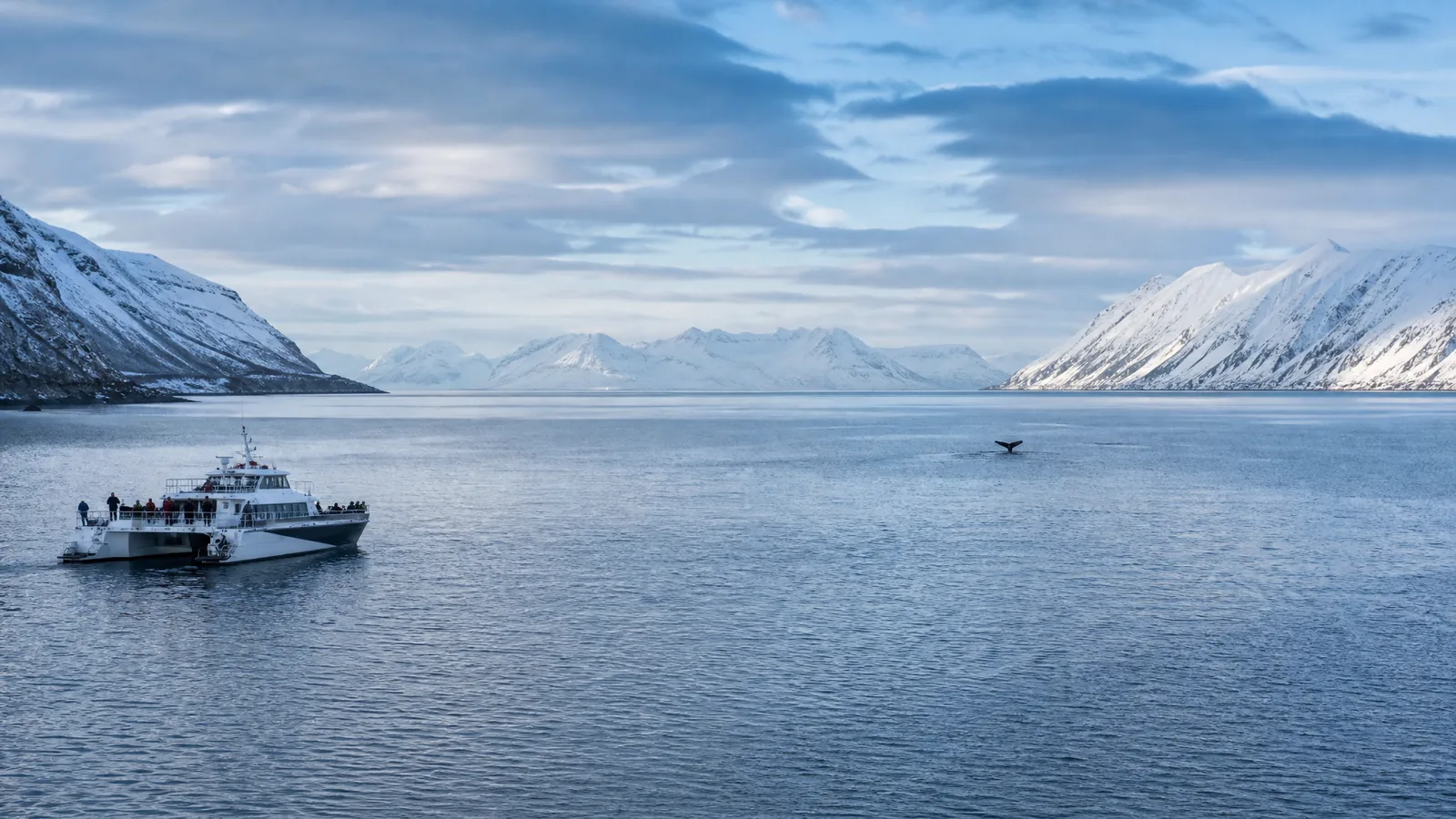
Booking choice: The high-speed catamaran safari, from $197 per person. Check dates Tour details
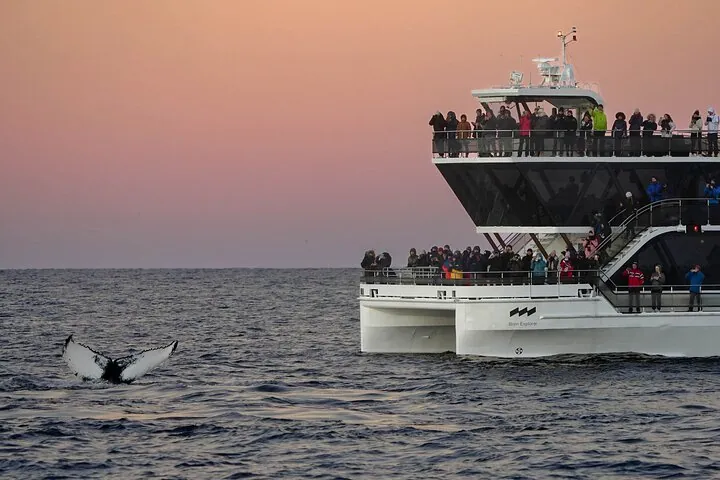
Whale watching from Tromsø is a winter activity with a short season that moves from year to year. Orcas and humpback whales follow the Norwegian spring-spawning herring into the fjords north of the city, and Visit Tromsø puts the season at "usually from the beginning of November until the end of January". Boats start selling earlier and some keep selling later. The whales decide.
This guide sets out the season month by month, the winters when the herring moved, and what the last weeks of January looked like in 2026. Tour dates come from the GetYourGuide and Viator listings and the operators' own pages, checked in October 2026.
The quick answer
Go between mid-November and early January. The whales usually arrive in late October or early November, peak through December, and thin out in the second half of January; in 2026 they had left the Skjervøy area before February. Put the whale day early in your stay, so a cancelled trip can move to a later date.
When is the whale watching season in Tromsø?
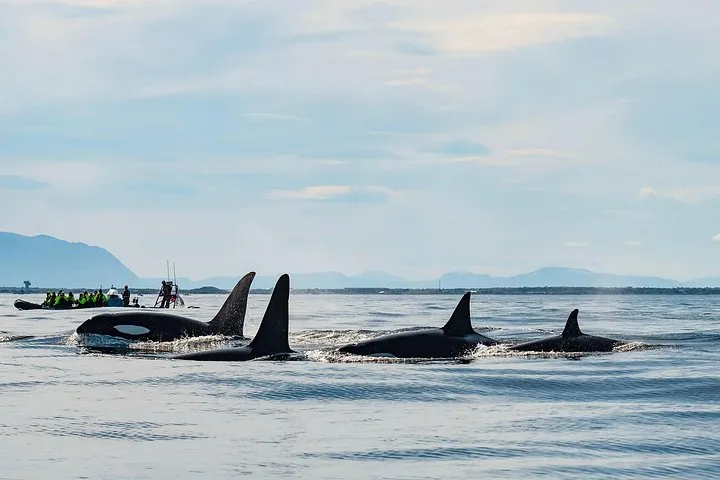
Roughly late October to the end of January. The reliable core is mid-November to early January.
Tours run longer than the whales stay. Brim Explorer ran daily trips from 9 October 2025 to 31 January 2026 and calls the best viewing "November to early January" (Brim Explorer). The high-speed catamaran sells its German-language 08:30 departure from 23 October 2026 to 31 January 2027, and its Italian-language 09:00 departure from 1 December. Green Gold of Norway, which runs RIBs at Skjervøy, says the orcas and humpbacks arrive around the end of October and stay until early February (Visit Tromsø listing).
A departure date on a booking page tells you when the boat runs. It says nothing about the whales. Here is how the winter usually plays out:
| When | Whales | Light in Tromsø | Our verdict |
|---|---|---|---|
| Late October | First orcas and humpbacks arrive; numbers vary a lot | The sun still rises, short days | Early and a gamble |
| November | Usually good and building | Polar night starts about 27 November | Good, quieter boats |
| December | Peak in most years | Polar night: blue twilight around midday | Best odds; Christmas prices on some boats |
| 1 to 15 January | Usually still good | Polar night ends about 15 January | Good |
| 16 to 31 January | Whales thin out; some years they leave | The sun is back | Risky: refunds, fjord cruises, sperm whales |
| February | Gone from the fjords in most recent years | Long days return | Don't plan a whale trip |
The most booked boat sails daily from 23 October to 31 January, with a second trip free if you see no whales.
Check datesWhy do the whales come to northern Norway in winter?
For the herring. Norwegian spring-spawning herring winters in deep fjords, and orcas and humpbacks come to eat it.
The Norwegian spring-spawning herring feeds out in the Norwegian Sea in summer. In September and October it heads north-east to winter off northern Norway, partly in deep fjords, and in January it starts the long swim south to spawn off Møre in February and March (Institute of Marine Research). That January departure is why the whale season ends when it does. Dense herring in a narrow fjord is the easiest meal in the Arctic.
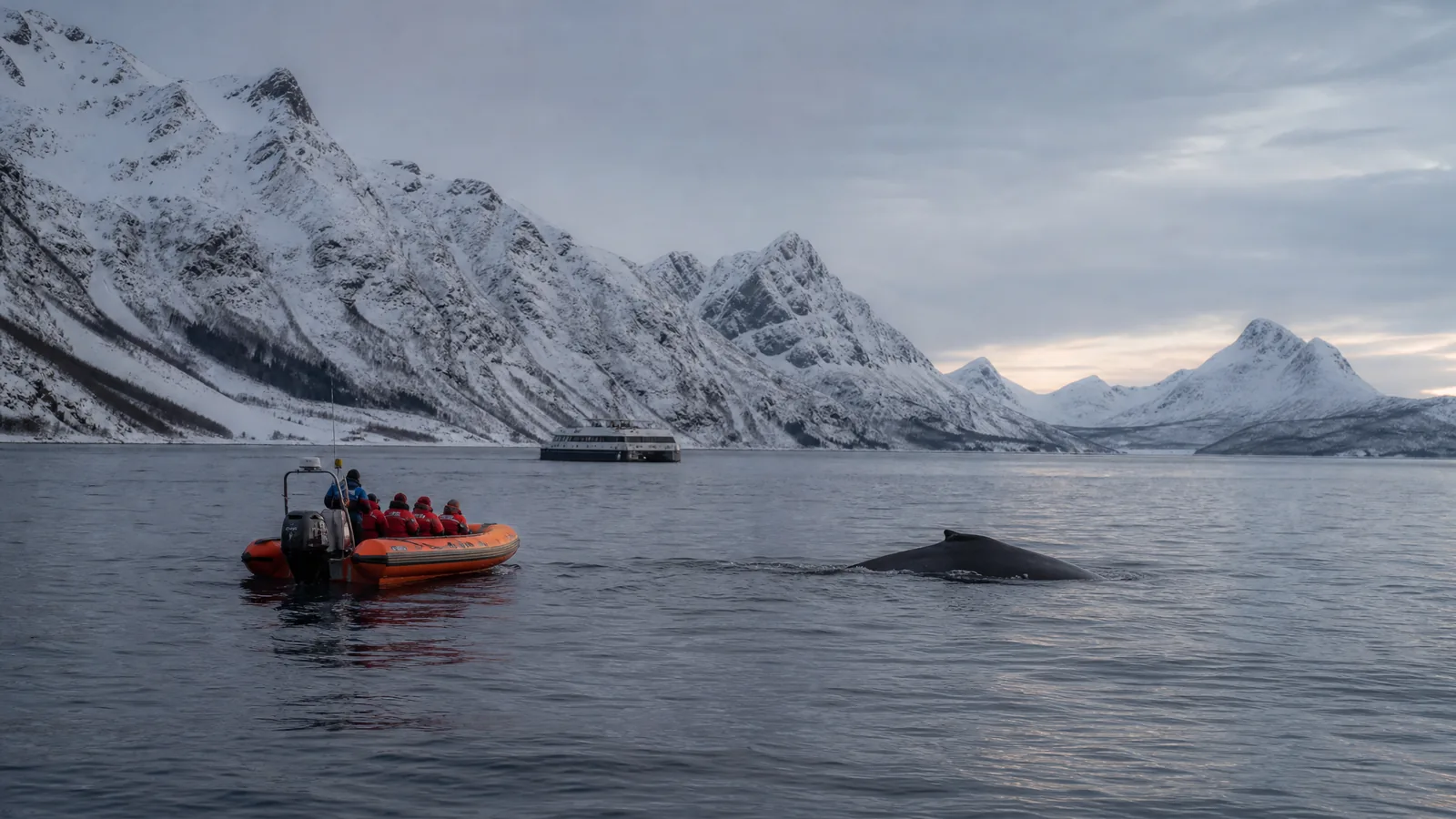
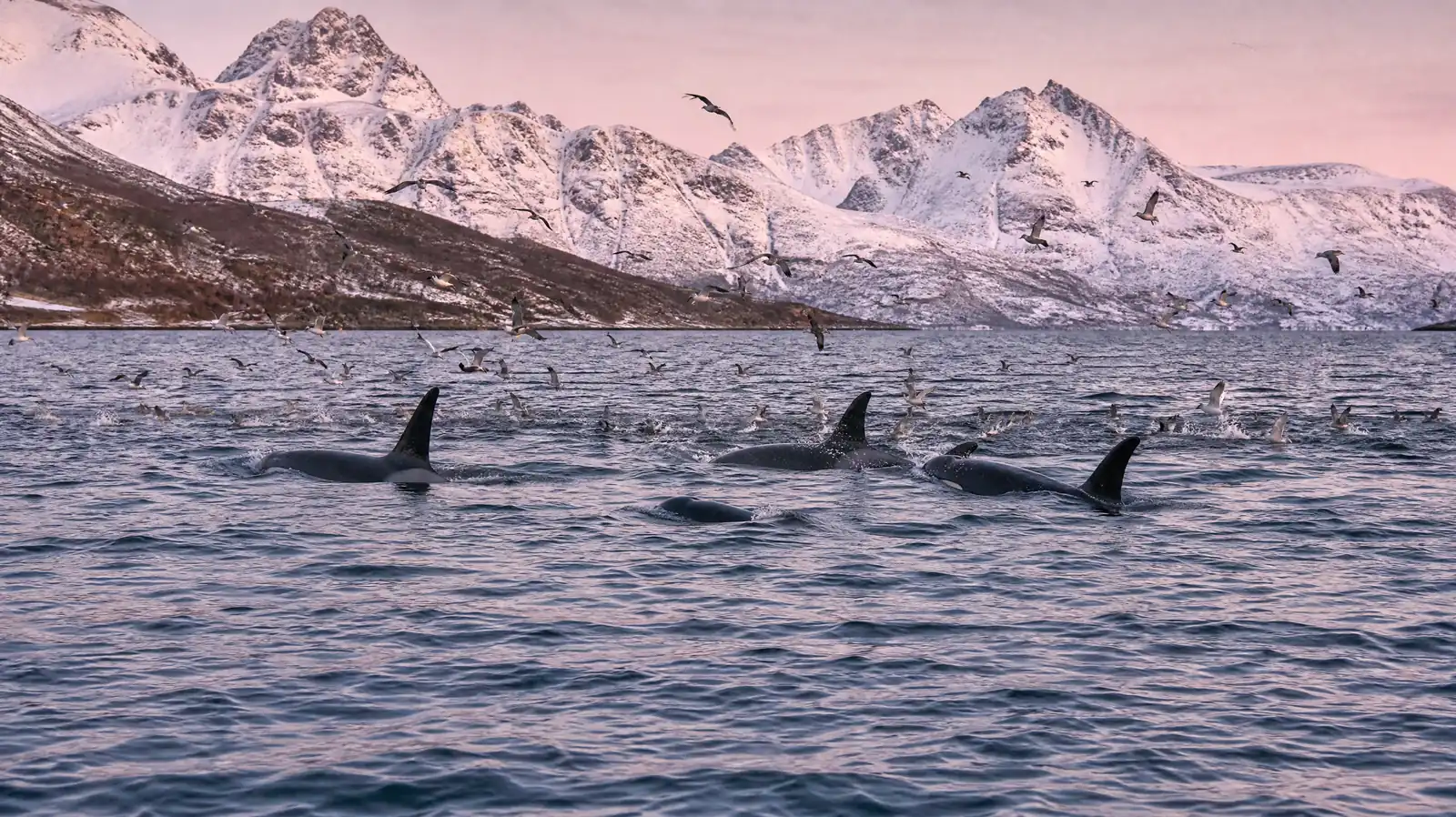
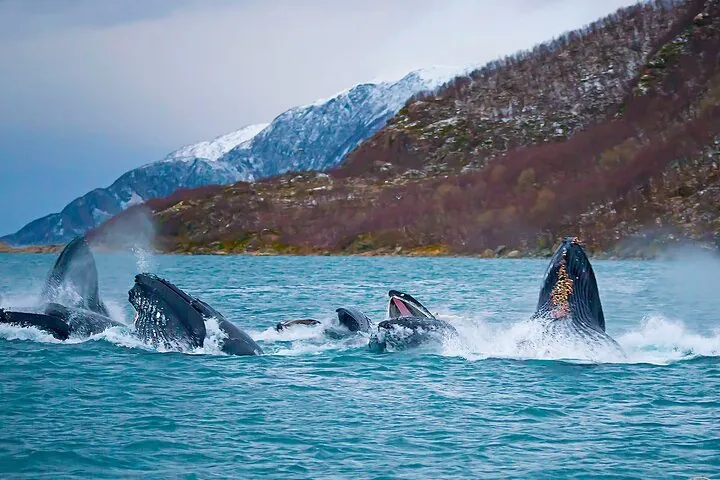
Orcas hunt it as a team. They herd a school into a tight ball near the surface and stun the fish with tail slaps, then pick them off one by one. Humpbacks feed the opposite way, lunging up through the ball with their mouths open, and often join the orcas at the same school. Fin whales turn up some winters. Sperm whales are a different story: they hunt in deep water off the coast, which is why boats that head out to open sea late in the season sometimes find them instead.
What you see depends on what the whales are doing. Feeding pods move fast and can be spectacular. Resting groups surface slowly, close together, then dive, and good boats give them room.
Where are the whales now, and why not next to Tromsø?
Since winter 2017-18 the herring, and the whales with it, have gathered around Kvænangen and Skjervøy, about 100 km north-east of Tromsø.
Older blog posts and photos show orcas a short ride from the city. Those date from a few winters when the herring sat in the fjords on Kvaløya, just west of Tromsø. Then it moved. Norway's Institute of Marine Research has tracked where the herring winters for decades:
| Winters | Where the herring wintered | What it meant for whale watching |
|---|---|---|
| Mid-1990s to mid-2000s | Innermost Vestfjorden, south of Lofoten | Orca trips from the Lofoten side, not Tromsø |
| 2007 to 2010 | Open sea north-west of Andenes | Offshore trips from Vesterålen |
| 2012-13 to 2016-17 | Fjords on Kvaløya, west of Tromsø | Short trips from the city |
| 2017-18 to today | Kvænangen and the fjords around Skjervøy | 3 to 3.5 hours by boat each way, or about 4 hours by bus |
The 2012-13 to 2016-17 dates for the Tromsø fjords come from the IWC whale watching handbook; the rest from the IMR. The institute's explanation for the moves is neat: when a strong new year class of herring joins the adults, it tends to pick the wintering area, and the older fish follow. A strong 2013 year class led the move to Kvænangen. The herring also seems to follow deep trenches towards the coast, and Håkjerringdjupet points straight at Kvænangen.
For you this means a long day. Brim Explorer's listing says its boats sail about 3 to 3.5 hours to reach the whales and spend about 1 to 1.5 hours around the feeding grounds. The herring could move again in any winter, so read where the boats are actually going before you book. Our guide to starting from Tromsø, or else from Skjervøy covers the two ways to get there.
What happens at the end of January?
The whales often leave in the second half of January. Boats then cancel, switch to fjord cruises with part refunds, or head out to open sea where sperm whales are the usual find.
The 2025-26 season ended early. Whale Tales, a whale watching and storytelling blog whose photos come from the Skjervøy area, wrote on 8 February 2026 that "all the whales have left the area around Skjervøy and Kveanangen", earlier than in previous seasons, when orcas and humpbacks stayed until mid-February. It linked the change to the commercial fishing moving further out.
Guest reviews from the last ten days of January 2026 tell the same story. On the all-inclusive safari on 31 January, one guest wrote: "At the end of January, the whales and orcas had already left with the herring. But we were able to admire adult male sperm whales up close." Another, on 25 January: "We had 3 hours of horrible choppy waters [...] and unfortunately only saw the tops of 4 sperms whales" (Alicia_P, Viator). On the high-speed catamaran on 29 January, the crew told guests before departure that the orcas had gone and offered a refund to anyone who preferred to stay ashore.
How each operator handles it matters more than the brochure:
| Boat | When the whales leave or the sea is too rough |
|---|---|
| Brim Explorer | Tours pause after two days in a row without whales; guests get a reschedule to a fjord cruise, or else a refund (Brim) |
| High-speed catamaran | Free ticket for another whale cruise in the same season if no whales; if weather blocks the route, a shorter fjord cruise and a 50% refund (Rødne Fjord Cruise terms) |
| Helgøy fast catamaran | Free rebooking on any date with space; in late January 2026 guests were offered a full refund, or else a fjord trip at half price (guests report) |
| MS Gabriele | In February 2026 guests were offered a refund, or else a fjord cruise with a stop at Sommarøy (guests report) |
| All-inclusive safari | Late January 2026 trips found sperm whales; one booking moved to a fjord tour with a refund (guests report) |
If your only dates fall after about 20 January, pick a boat with a free rebooking and read the operator's email the day before. Those emails are honest more often than not.
Polar night or daylight: which part of the season looks best?
December sails in polar night twilight, which photographs beautifully. November and late January have more light but weaker odds at either end.
From about 27 November to 15 January the sun does not rise in Tromsø, and there are a few hours of twilight around midday (Visit Tromsø). The boats plan around it. Most leave between 07:45 and 09:00 in darkness, reach the whales for the brightest part of the day, and come back between about 16:00 and 17:30 in the dark again.
The twilight is pink and blue and very low, which makes for moody photos and slow shutter speeds. Bring a lens that copes with low light, and expect to push the ISO. The bonus is the trip home: several guests saw the aurora on the way back. One wrote of MS Alba in January: "Our trip was during Polar Night, so the views and colours of the sky were incredible. We were even lucky enough to see the Northern Lights on the return journey!"
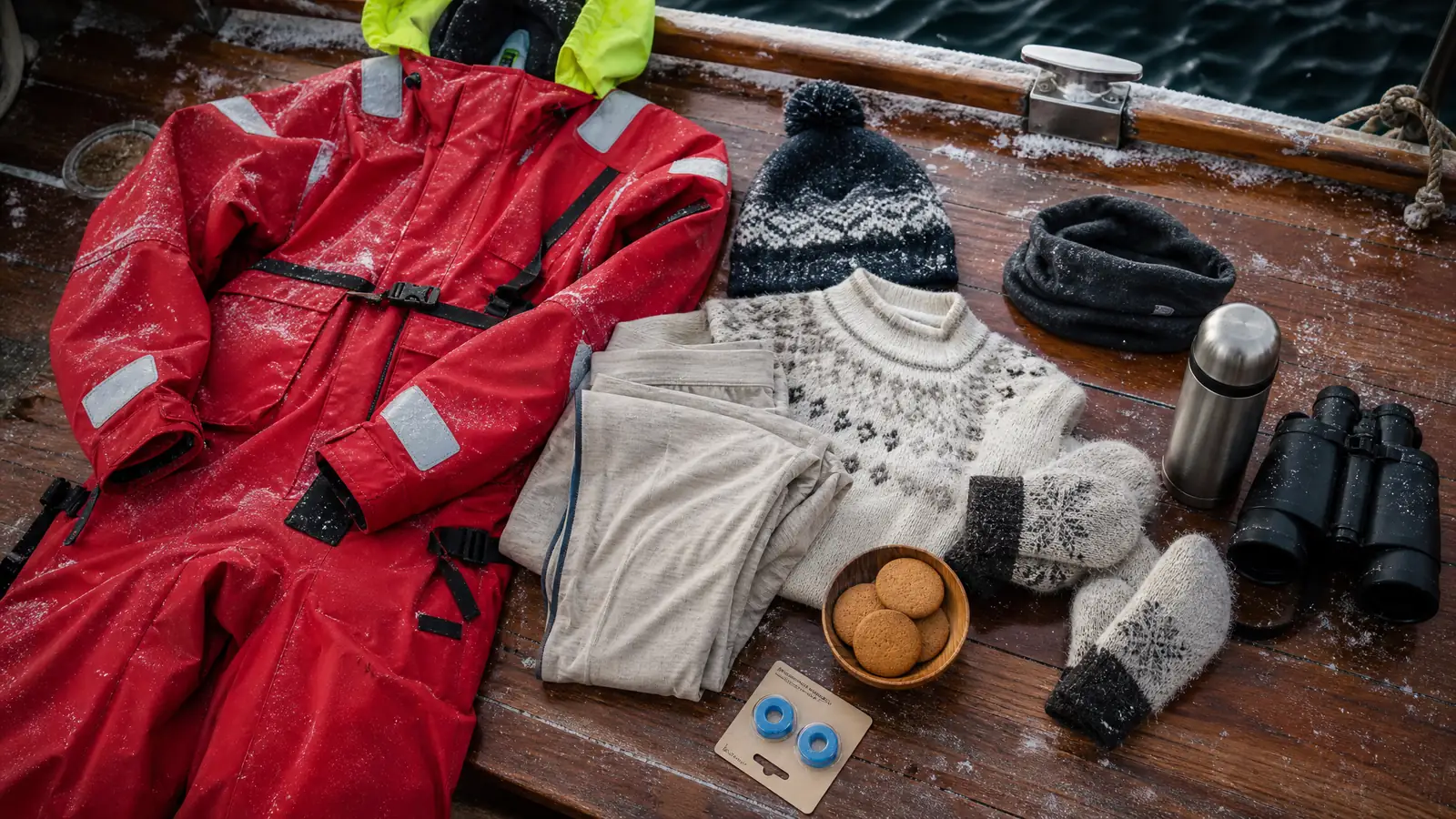
Cold is the other factor. Visit Tromsø gives an average winter temperature of about -4°C, and the wind at sea makes it feel far colder. Our guide on what to wear whale watching covers the layers.
When should you book, and which day of your trip?
For Christmas and New Year, as soon as your flights are fixed; in November a week or two ahead is usually enough. Put the whale day early in your stay.
Every tour on this site has free cancellation up to 24 hours before on GetYourGuide and Viator, so booking early costs nothing. Booking direct can be stricter: Brim Explorer refunds only if you cancel more than 48 hours ahead.
The week between Christmas and New Year is the busiest and dearest. Brim charged adults NOK 2,189 instead of NOK 1,990 from 19 December 2025 to 4 January 2026, and Arctic Explorers' self-arrival RIB at Skjervøy goes from NOK 2,600 in November to NOK 3,400 from 24 December to 4 January (Visit Tromsø).
Day one or two of your trip is the right slot for whales. Weather cancellations arrive by email the day before, and the free second trips most big boats offer are "subject to availability" in the same season, so they only help if you still have days left. Don't book an aurora chase the night before a 05:00 Skjervøy bus; one operator's listing says so directly. Our price guide compares what each boat costs.
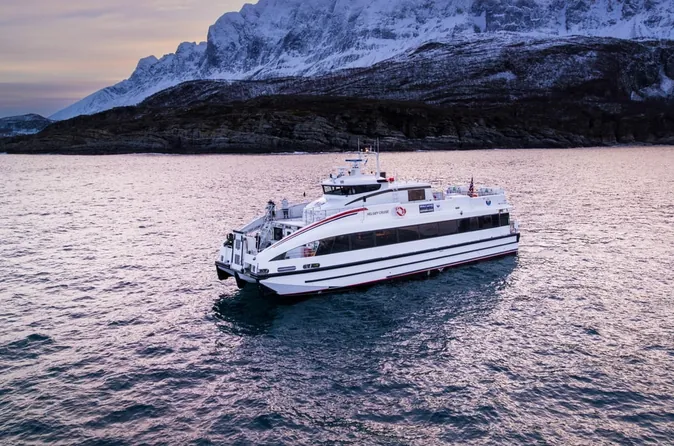
A good pick for late-season dates: no more than 90 guests on a 147-seat boat, and a free rebooking on any date with space if the whales stay away.
Check dates Tour detailsFrequently asked questions
Can you see whales in Tromsø in February?
Rarely. In recent seasons the orcas and humpbacks have left the Skjervøy area by early or mid-February, and in 2026 they were gone before February began. Some boats run fjord cruises instead; sperm whales offshore are possible but not something to plan a trip around.
Can you see whales in Tromsø in October?
From late October, sometimes. Brim Explorer started daily tours on 9 October 2025 and the high-speed catamaran starts on 23 October 2026, but the herring and the whales usually build through November.
Is December the best month for whale watching in Tromsø?
For the odds, yes in most years: the whales are settled and every boat is running. It is also polar night, and the fortnight around Christmas is the most expensive time to go.
Are whale sightings guaranteed?
No. Visit Tromsø says sightings cannot be guaranteed, and the 95% and 99% figures on some listings are the operators' own claims. What several boats do guarantee is a free second trip in the same season if you see no whales.
Ready to book
Choose your boat
Free cancellation up to 24 hours before on every option. Prices are from-prices in USD and move with the season.
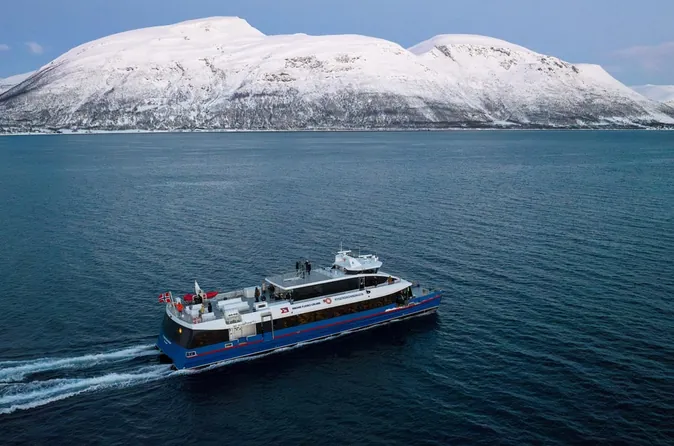
Whale Safari on a High-Speed Catamaran
- About 8 hours return from central Tromsø
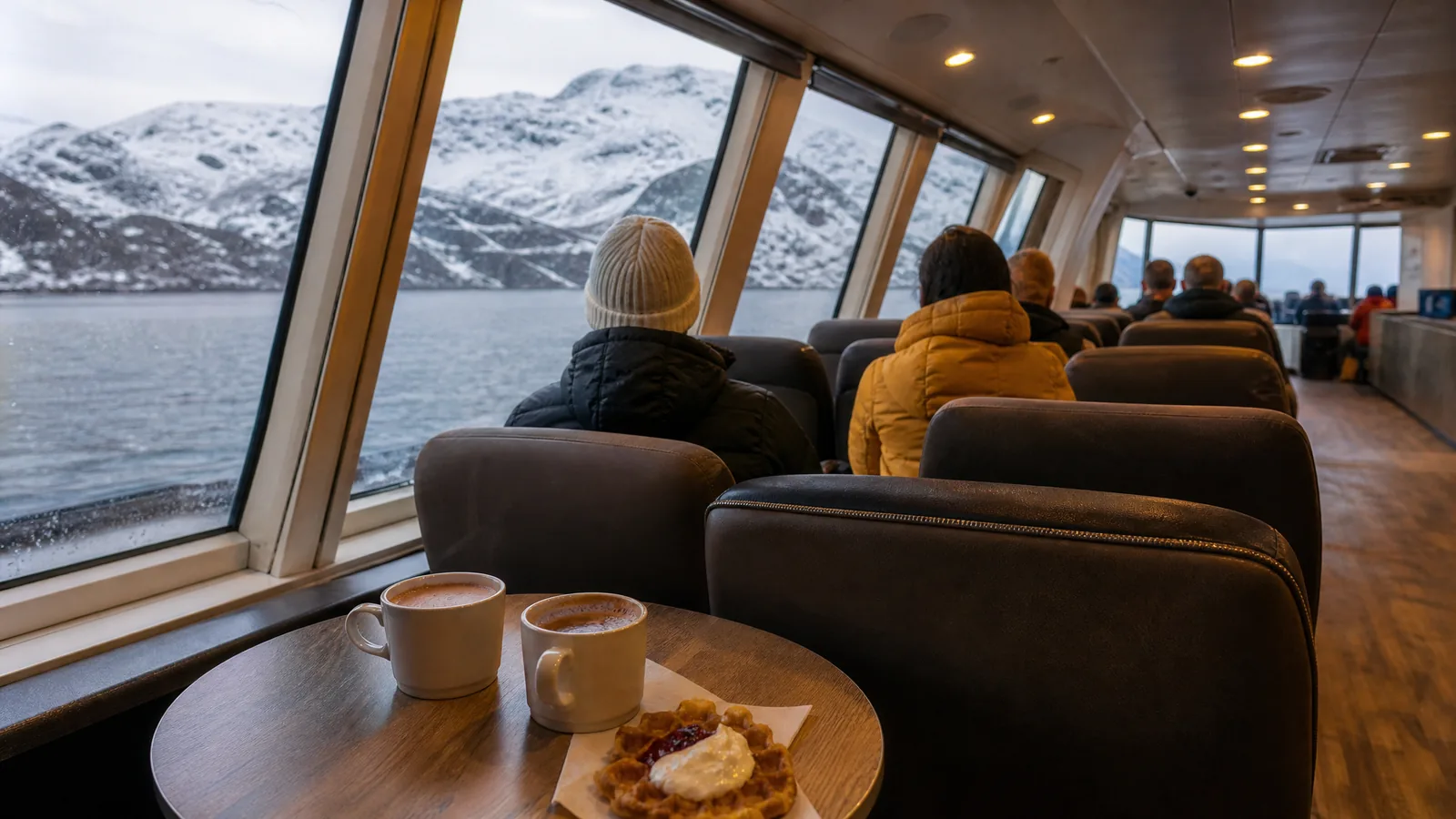
- Heated lounge with panoramic windows and a big outdoor deck
- Guides in English, German or Italian (by departure)
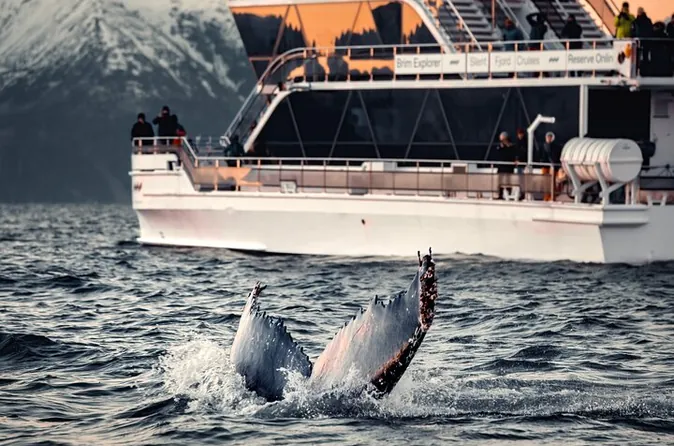
Silent Whale Watching by Hybrid-Electric Boat
- 7 to 9 hours return from Tromsø, depending on the whales
- Electric drive near the whales, less noise
- Heated saloons with panoramic windows
Whale Watching on a Fast, Comfortable Catamaran
Max 90 guests on 147 seats, free rebooking without whales